“Why It's Not Your Fault the Door Won't Open”
👉 For more insights, check out the full book and audio summary here 📖
📕 Transcript and audio of this episode is available here for free
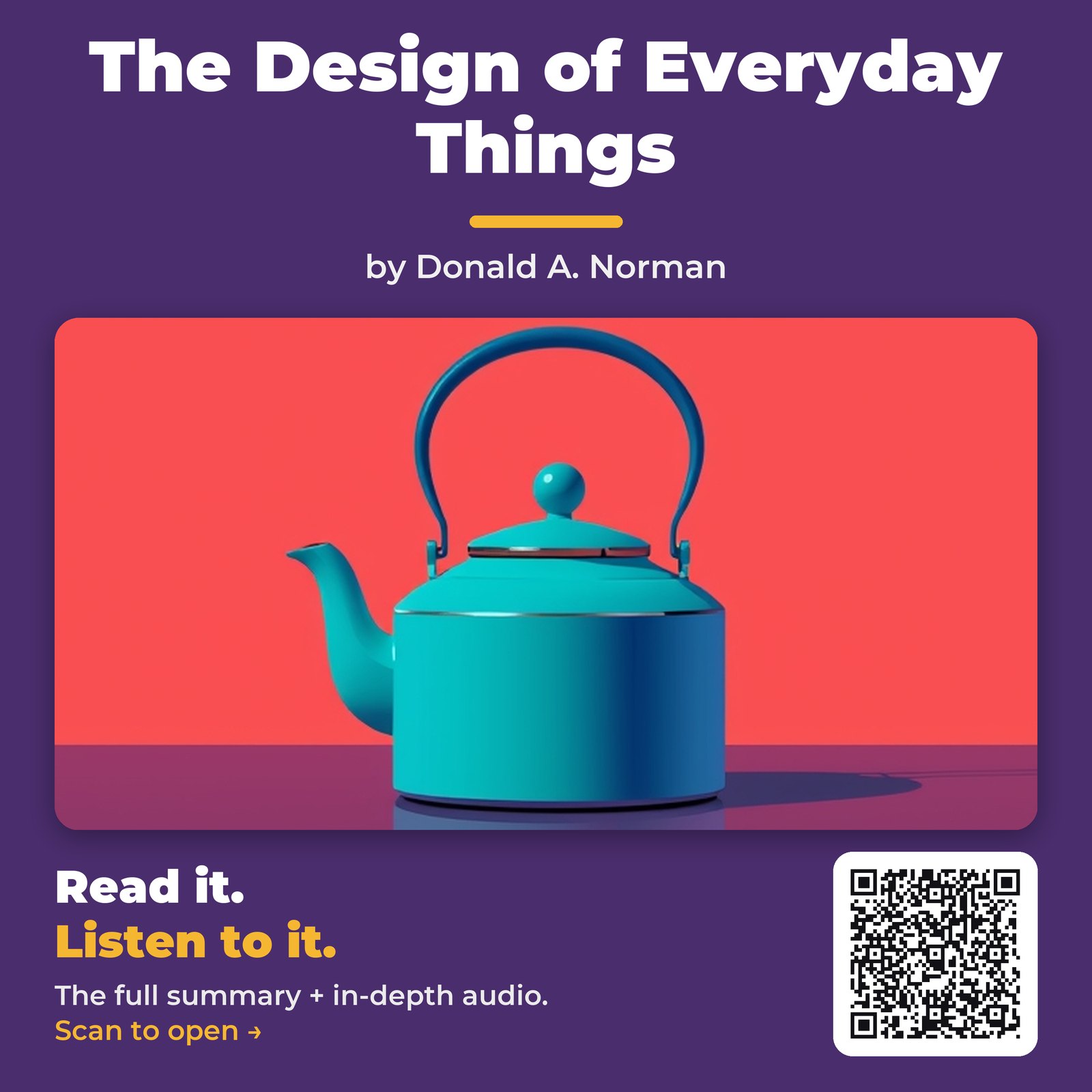
Title: The Design of Everyday Things
Author: Donald A. Norman
Category: Creativity & the Arts
Have you ever pushed a door that clearly said pull? Sam opens with that exact question, and Sophie admits it happens constantly — which is precisely the moment Donald Norman's classic zeroes in on.
The episode walks through the book's core vocabulary: affordances versus signifiers, the flat plate versus the vertical handle, and why feedback (and too much of it) shapes whether we trust a device. Sam and Sophie then unpack conceptual models, the Seven Stages of Action, and the two gulfs — execution and evaluation — that good design has to bridge. They also split human error into slips and mistakes, and land on Norman's toolkit: forcing functions, reversibility, and constraints.
If you've ever felt personally bad with gadgets, this one's for you. The takeaway is that learned helplessness is almost always a design failure, not a character flaw — and once you see these principles, you can't unsee them.
The Design of Everyday Things by Donald A. Norman. For the full written summary, head to 7minutebooks.com/app — over 6,000 fiction and nonfiction titles you can read or listen to in any language, with infographics on many titles. Unlimited access from $2.99 a month, $9.99 a year, or $19.99 lifetime.
Chapters
00:00The Push Door Problem00:53Affordances Versus Signifiers01:55Feedback And Conceptual Models03:08Seven Stages And Two Gulfs03:50Slips, Mistakes, And Forcing Functions05:12Learned Helplessness And Empathy
Topics
Related episodes